
LUCIDER — A novel by Roy Martens




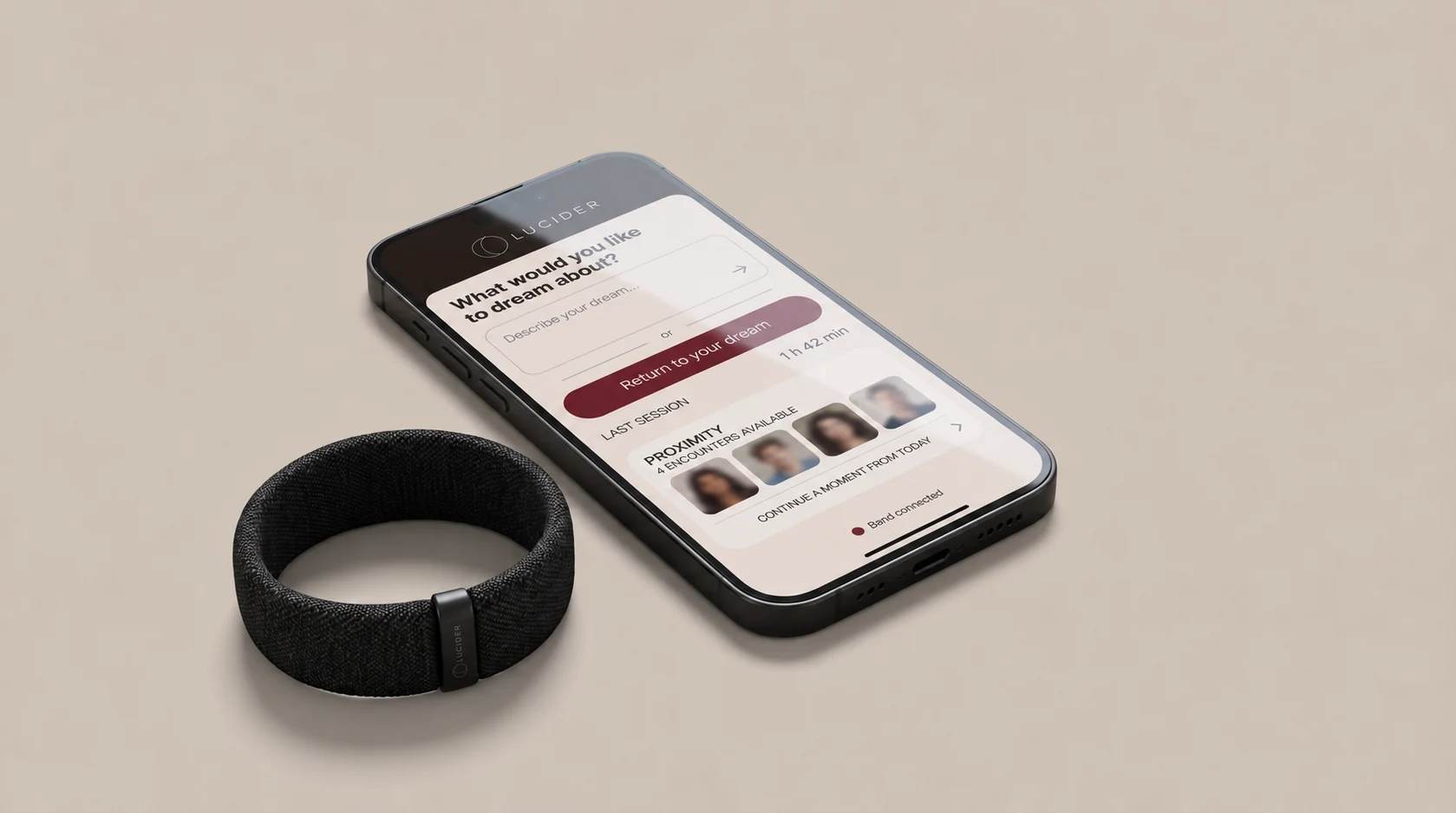
A world built around you.
Lucider learns how your mind connects memories, places and people, then shapes those associations into dreams you can return to.
- 01
Tell it where to begin.
Choose the experiences you want to explore and the boundaries you want Lucider to respect.
- 02
Put on the band.
Lightweight and woven, with no screen or indicator lights. Designed to stay out of your way while you sleep.
- 03
Let Lucider learn.
Over the first nights, Lucider maps the associations that make a dream yours.
- 04
Enter a dream.
Dream on your own, or share the experience with someone else.

Giving humanity
its nights back.
“So much of a person’s life is decided by circumstance. Where they grow up. What they can afford. Who they happen to meet. I believe people should have more say in what they get to experience.
We spend a third of our lives asleep. That time matters. Our bodies need it. But I wanted to know whether rest could also leave room for experiences we might otherwise never have.
That’s why I built Lucider. What people choose to do with that possibility should be theirs to decide.”
Inside Lucider
An introduction to Lucider: how it begins, what it makes possible, and where you might take it.

The world you’ve entered is fiction.
LUCIDER
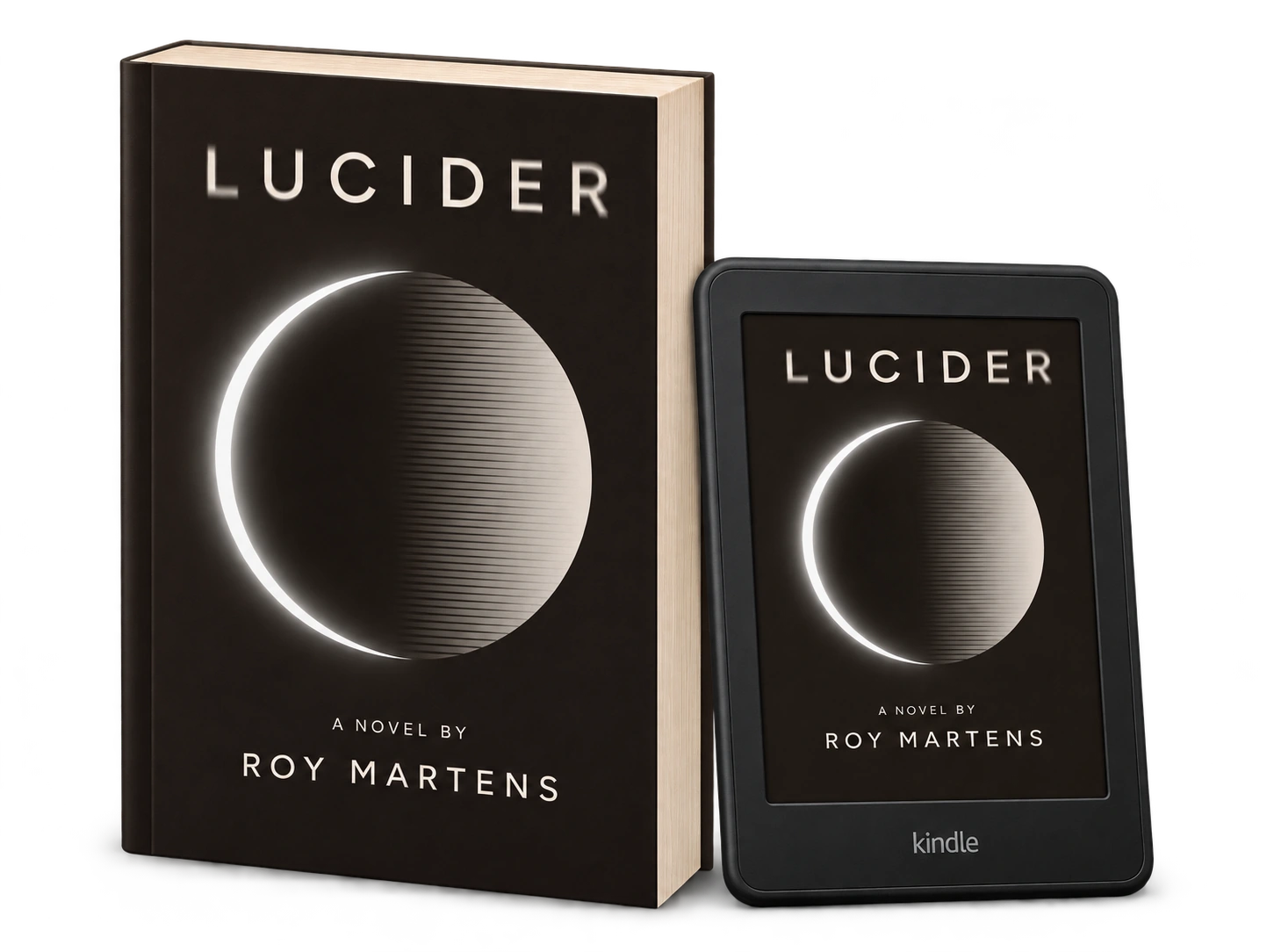
A literary speculative novel by Roy Martens.
What if you could live the life you never chose?
With Lucider, people can return to moments they wish had lasted longer, explore paths they never took, and continue encounters that might otherwise have ended with a passing glance. Dreams become experiences they can create, share, and remember.
But every experience teaches Lucider something about the person having it. What they want. What they avoid. What keeps them coming back. And the more the system learns, the better it becomes at influencing what they choose next.
Psychologist Clara Voss begins to see the consequences in her patients: relationships that extend beyond waking life, changes in what they want that they struggle to explain, and experiences they are increasingly reluctant to leave behind.
When Lucider recruits Clara to make the people it reconstructs in dreams more emotionally convincing, she finds herself helping a system whose influence she has begun to question.
Meanwhile, founder Victor Vale discovers that the technology is succeeding in ways he never intended. For James Holt, one of Clara’s patients, a relationship begun in dreams is changing the life he returns to each morning.
Nothing has malfunctioned. Lucider is doing exactly what it was designed to do.
The Design Odyssey Art
The design of the page
Different ways of seeing the same person.
Lucider moves between narration, conversations, clinical notes and system records. Each captures something about a person, while leaving something else out.
Typography and space
I deliberately moved away from conventional first-line indents for the main narrative, keeping those paragraphs flush left. Crimson Pro carries the narrative; Figtree gives the chapter headings a contemporary presence. Small dialogue indents and distinct typefaces for notes and system records give each material its own character.
Dreams and rhythm
Short sentences, fragments and white space follow attention through sensations, memories and familiar details. Recognition can arrive before the context does. Sometimes the fragments quicken the pace; elsewhere, they hold a moment longer.
Ordinary details return throughout the novel, changing as the characters’ understanding changes.
Figtree · chapter headings
Page 50
The author
Where the story began.

A note to the author.
For questions about LUCIDER or something you’d like to share after reading.